What happens when a project reaches the point where individual activities increasingly need to come together? At the fifth STEP4NAMs Partner Meeting in Galway, the answer became clear: connect the dots, translate experience into action and prepare the next steps towards the practical uptake of New Approach Methodologies (NAMs).
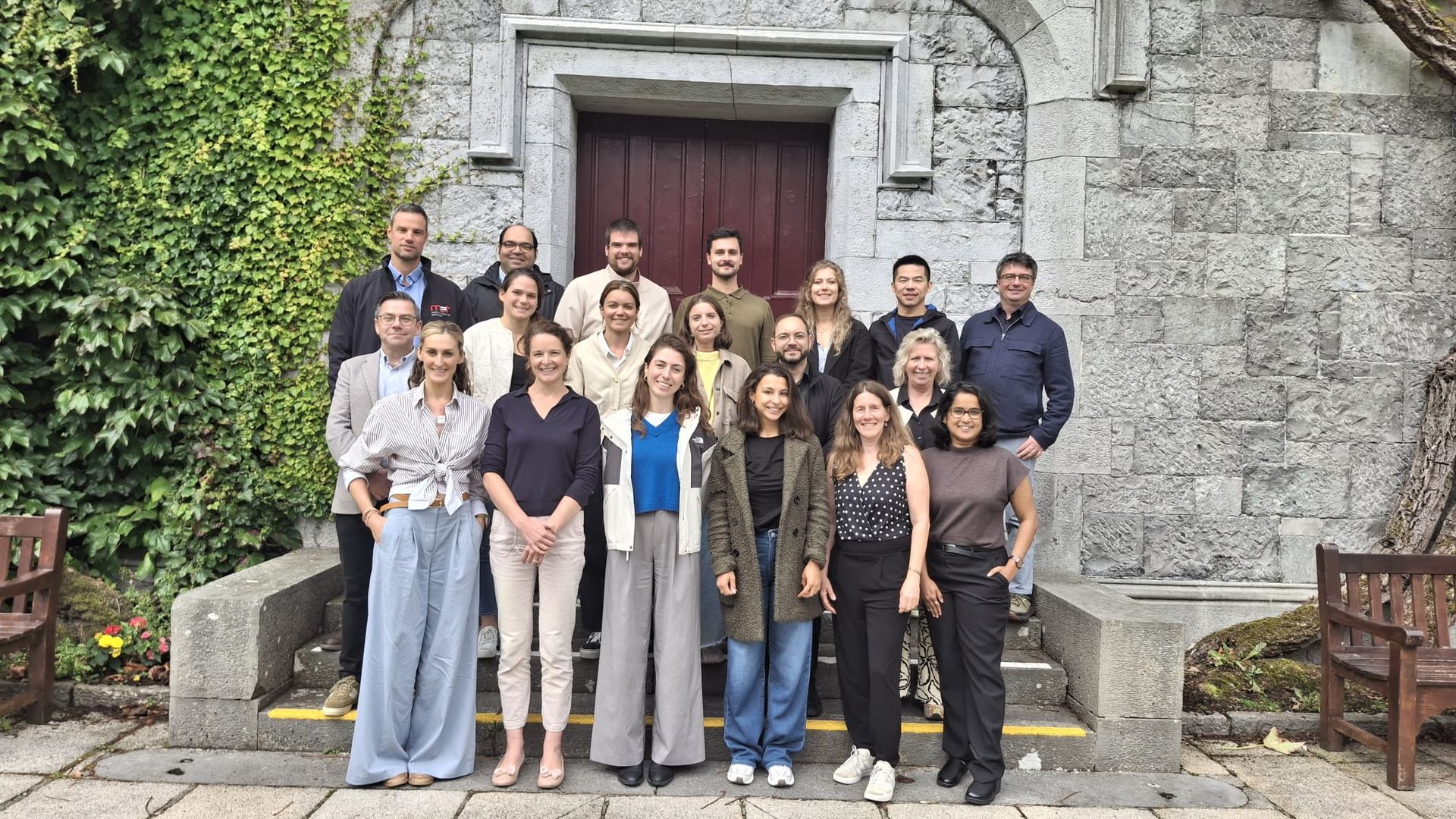
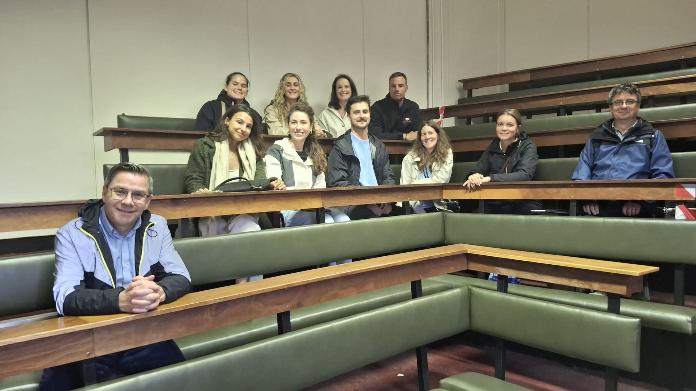
On 26 August 2026, the STEP4NAMs partners gathered at the University of Galway for their fifth project meeting. Hosted in the Hynes Boardroom in the university’s historic Quadrangle, the meeting brought together representatives from BioRegio STERN, BOM, IQ, Eurasanté, MPR, the University of Galway and ATU, while Biovia, the University of Luxembourg and the 3R-Center at the University of Tübingen joined online.
With the project moving through its mid-term phase, the meeting was less about starting new strands of work and more about bringing existing ones closer together. Across all work topics, the partners coordinated upcoming activities, reviewed progress and discussed how results from training, pilot studies and strategy development can increasingly reinforce each other.
Turning the STEP4NAMs Training & Support Programme into practice
A central focus in Galway was the further implementation of the STEP4NAMs Training & Support Programme. The programme is designed as a pathway that supports companies and other stakeholders from their first encounter with NAMs through to practical implementation. Its three pillars address different stages of this journey:
- EDUCATE provides flexible online training on NAM fundamentals and technologies.
- ENABLE offers SMEs tailored support through on-site training, technical guidance and individual assistance.
- APPLY connects SMEs and industry around concrete challenges and NAM use cases.
In Galway, the partners worked in detail on the
upcoming activities within all three pillars – with particular attention on the
next ENABLE and APPLY steps.
Following previous activities, further ENABLE on-site
trainings are already taking shape. ATU is preparing the next training for
November 2026, while the University of Tübingen is planning its first hands-on
training for January 2027. These formats are intended to give SMEs the
opportunity not only to learn about NAM technologies, but to explore their
practical relevance for their own R&D environments.
The first APPLY round is also progressing. The
selected participants are expected to be announced soon. At the same time, the
consortium used the meeting to reflect on experiences from the first
application round and discuss how the process could be further developed for
the next round in 2027.
The common objective remains clear: STEP4NAMs should
help stakeholders move beyond awareness and theoretical knowledge towards the
actual use of NAMs.
Four pilots, four perspectives on NAM development and validation
The project’s four pilot studies provided another important part of the meeting. The pilot partners presented updates on their current work and discussed the next implementation steps. Together, the pilots cover very different technological and application areas:
- a Multi-Organ Digital Twin and microfluidic lung-on-chip model in Galway,
- the multi-site functional validation of Organ-on-Chip models at the University of Tübingen,
- bench-top simulation systems for neuro-thrombectomy technologies at ATU,
- and a Parkinson’s disease organoid model at the University of Luxembourg.
While the technologies differ, the discussion increasingly focused on what can be learned across the individual pilots. How can experiences from development and validation be made useful beyond the respective pilot? Which insights should feed into the future NAM Validation Manual? And how can pilot results be connected more closely with training, communication and the project’s strategic work? These questions will become increasingly important during the second half of STEP4NAMs. The pilots are not intended to remain isolated demonstrations. Their experiences can provide practical evidence for the tools, recommendations and strategic outputs the project is developing.
Preparing the next strategic step
The Galway meeting also marked the beginning of a stronger focus on strategy development and capitalisation. The partners exchanged first ideas on the implementation of the joint STEP4NAMs strategy and the two sector-specific action plans. Discussions addressed possible topics, partner contributions and, above all, how findings generated throughout the project can be translated into outputs that remain useful beyond the project itself.
This reflects an important shift in the project: training activities, pilots, stakeholder feedback and strategic work are increasingly being considered as connected elements rather than separate tasks. The coming months will therefore be about consolidating what has been learned, identifying common messages and turning project experience into practical guidance for the wider uptake of NAMs in the BioPharma and MedTech sectors.
Project work in Galway – combining collaboration with local impressions
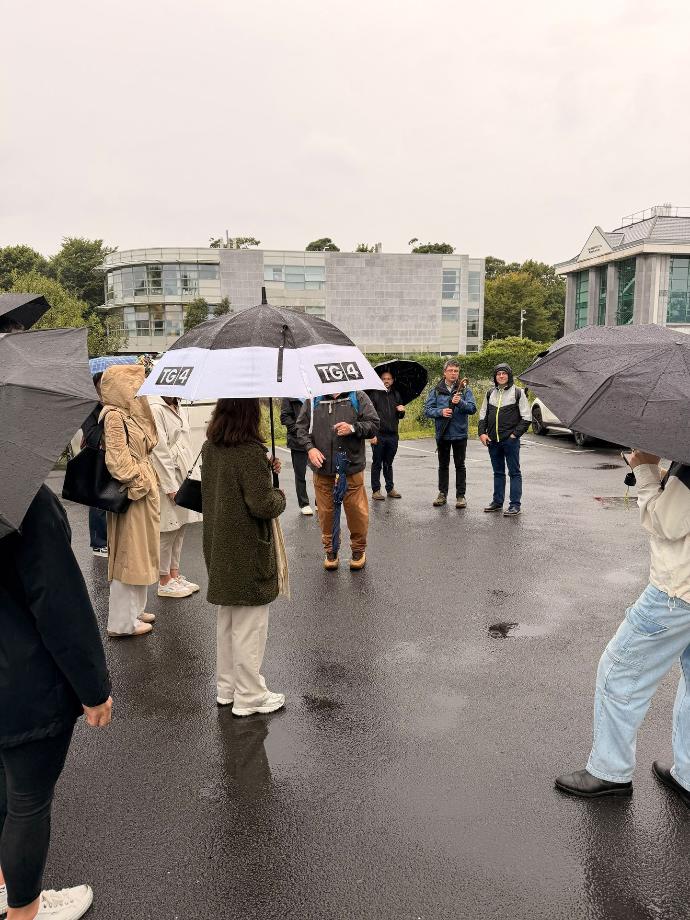
As with previous STEP4NAMs partner meetings, the meeting in Galway combined project discussions with opportunities for direct exchange across the consortium. Alongside presentations and work-package sessions, the in-person format supported more detailed discussions, cross-partner coordination and the continuation of topics beyond the scheduled agenda. This shared experience provides a strong basis for continued collaboration across the consortium. It will become increasingly important as project activities become more closely interconnected.
From individual activities to a connected project
Galway therefore
represented another step in the evolution of STEP4NAMs. The foundations have
been laid: training formats are running, pilot studies are progressing and the
first APPLY round is underway. The next challenge is to connect these elements
more closely and ensure that the knowledge generated across the project results
in practical support, strategic recommendations and tools that can contribute
to the broader adoption of NAMs. With the next ENABLE activities, further pilot
developments and the strategy process already ahead, the second half of
STEP4NAMs is taking shape – with an increasing focus on turning project results
into practical impact.